Cursive alphabet
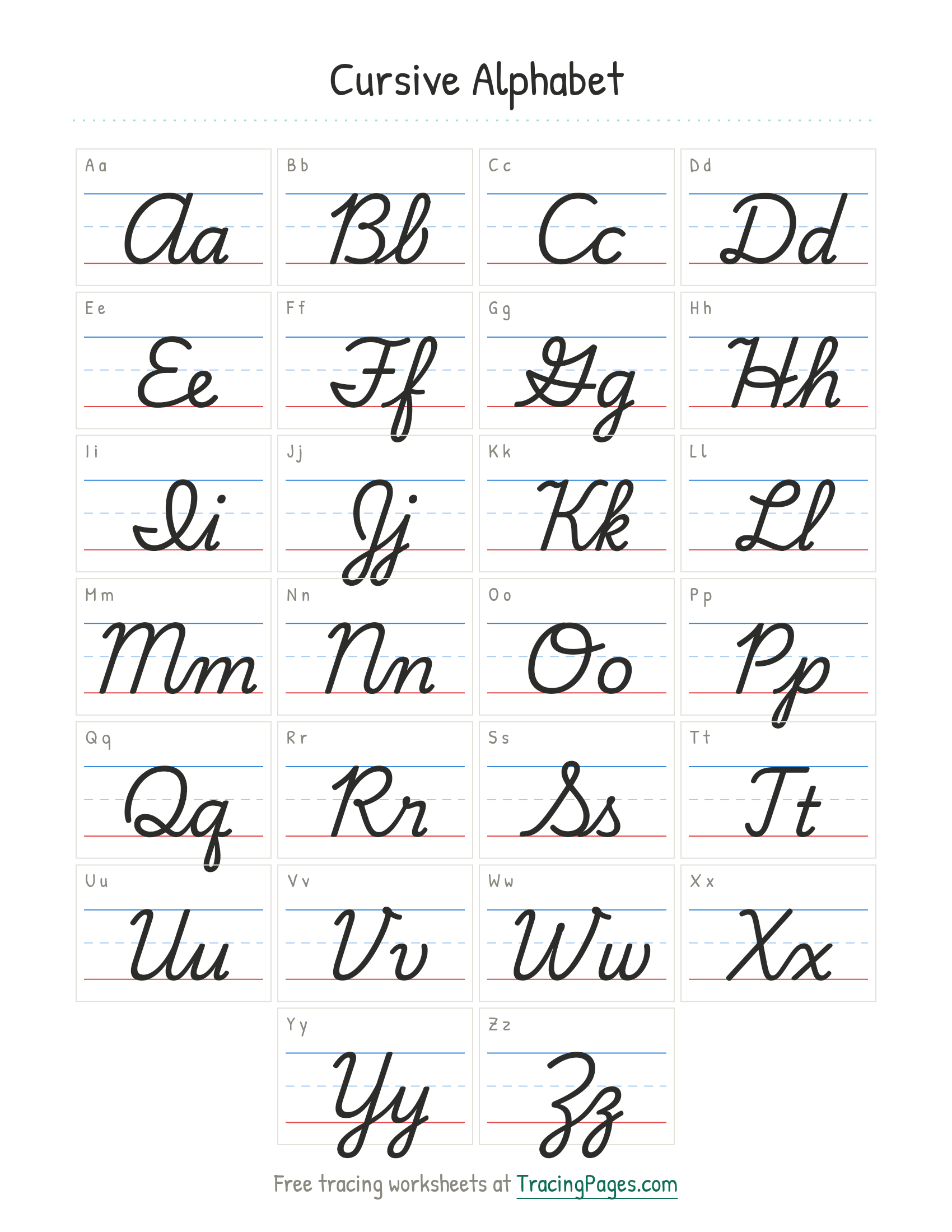
Every letter of the cursive alphabet, capital and lowercase, on one printable chart, with the print letter beside each pair so you can match them up. Below it are six practice sheets that take you through A to Z one letter at a time.
Cursive practice sheets, A to Z
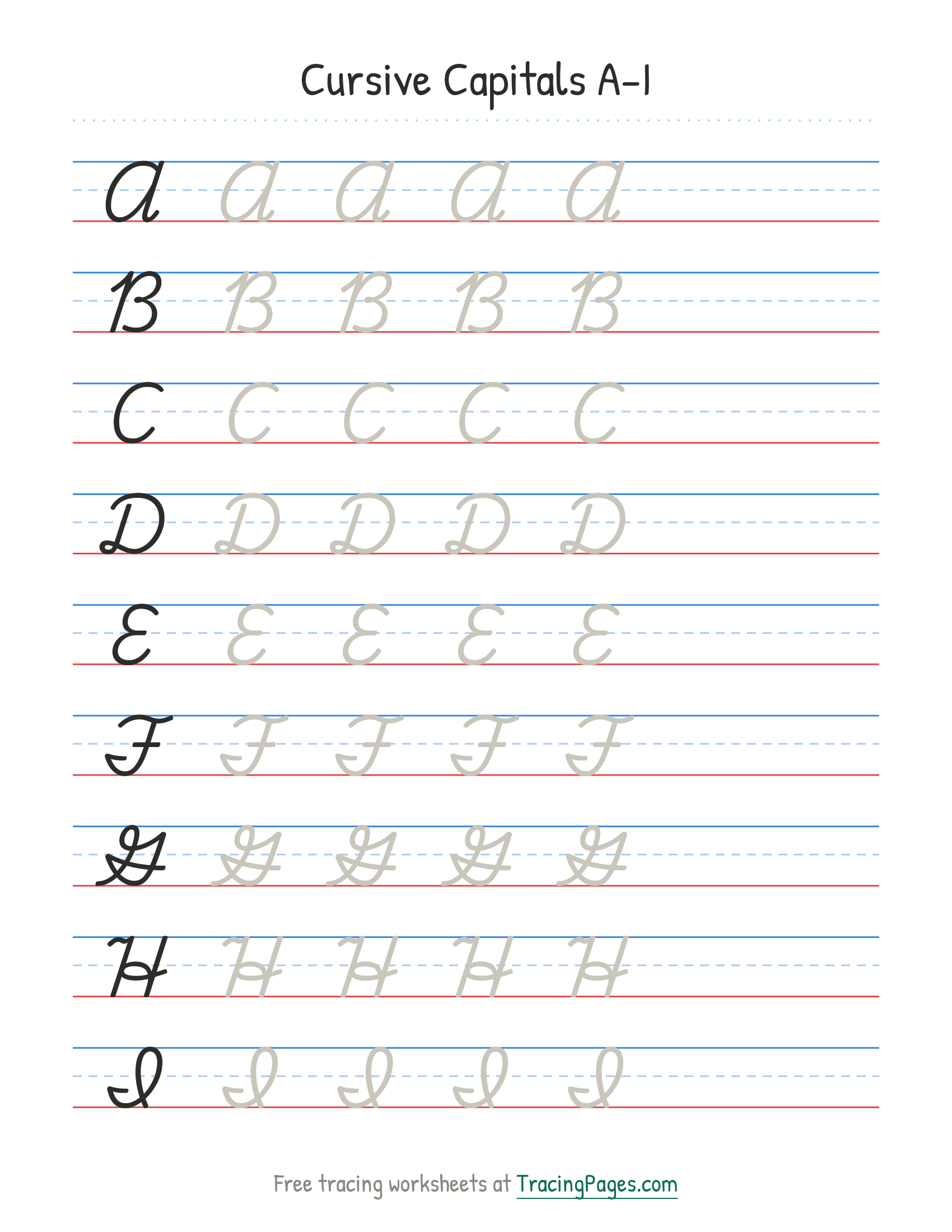
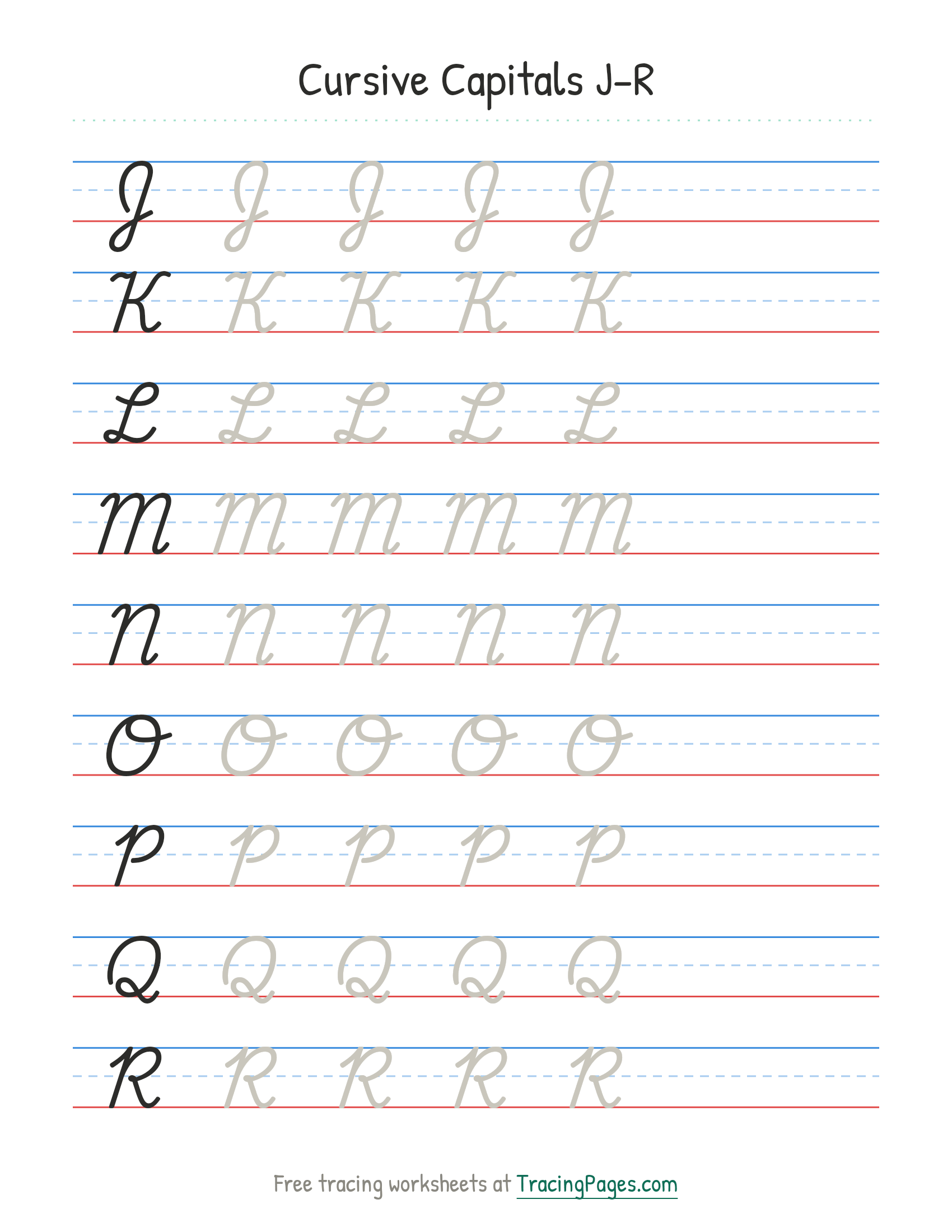
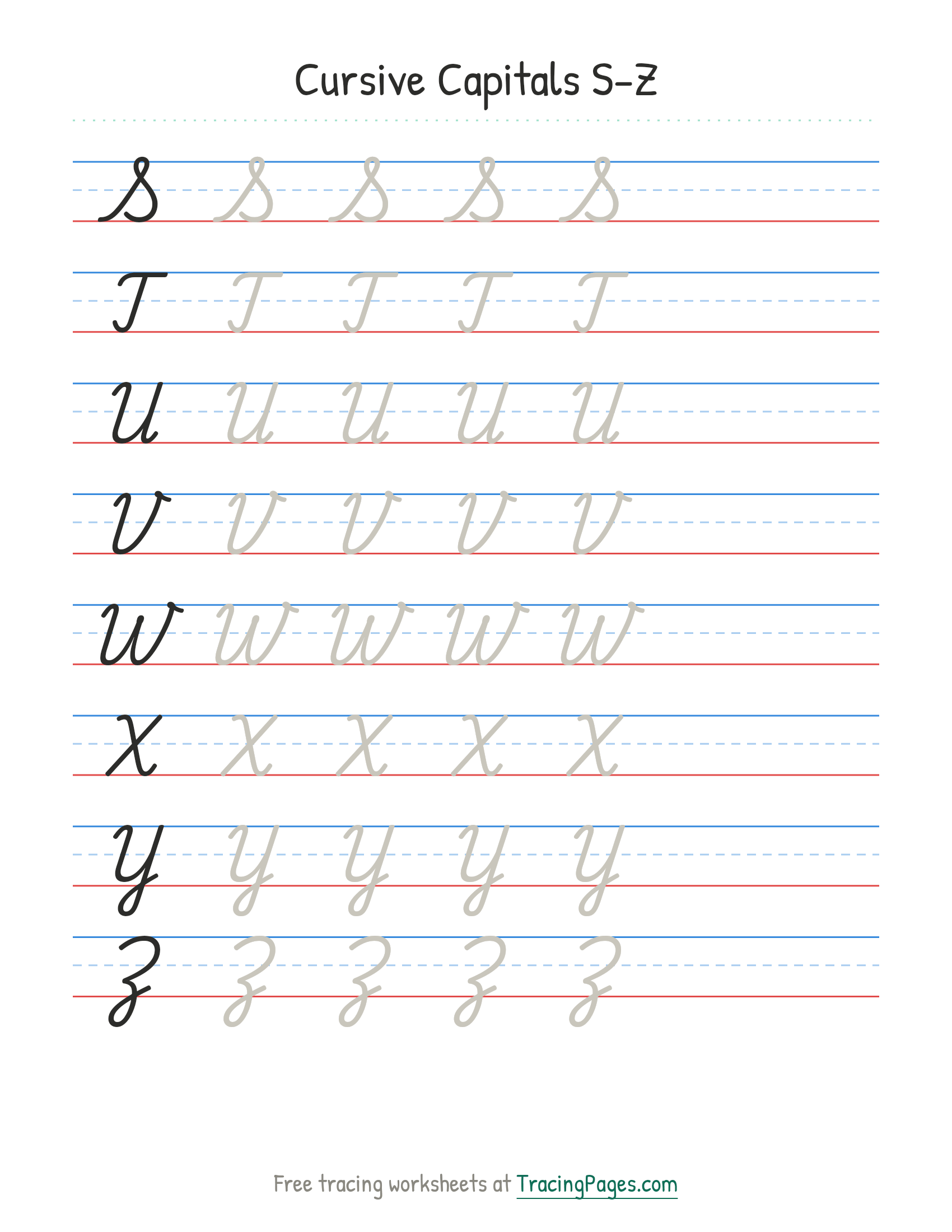
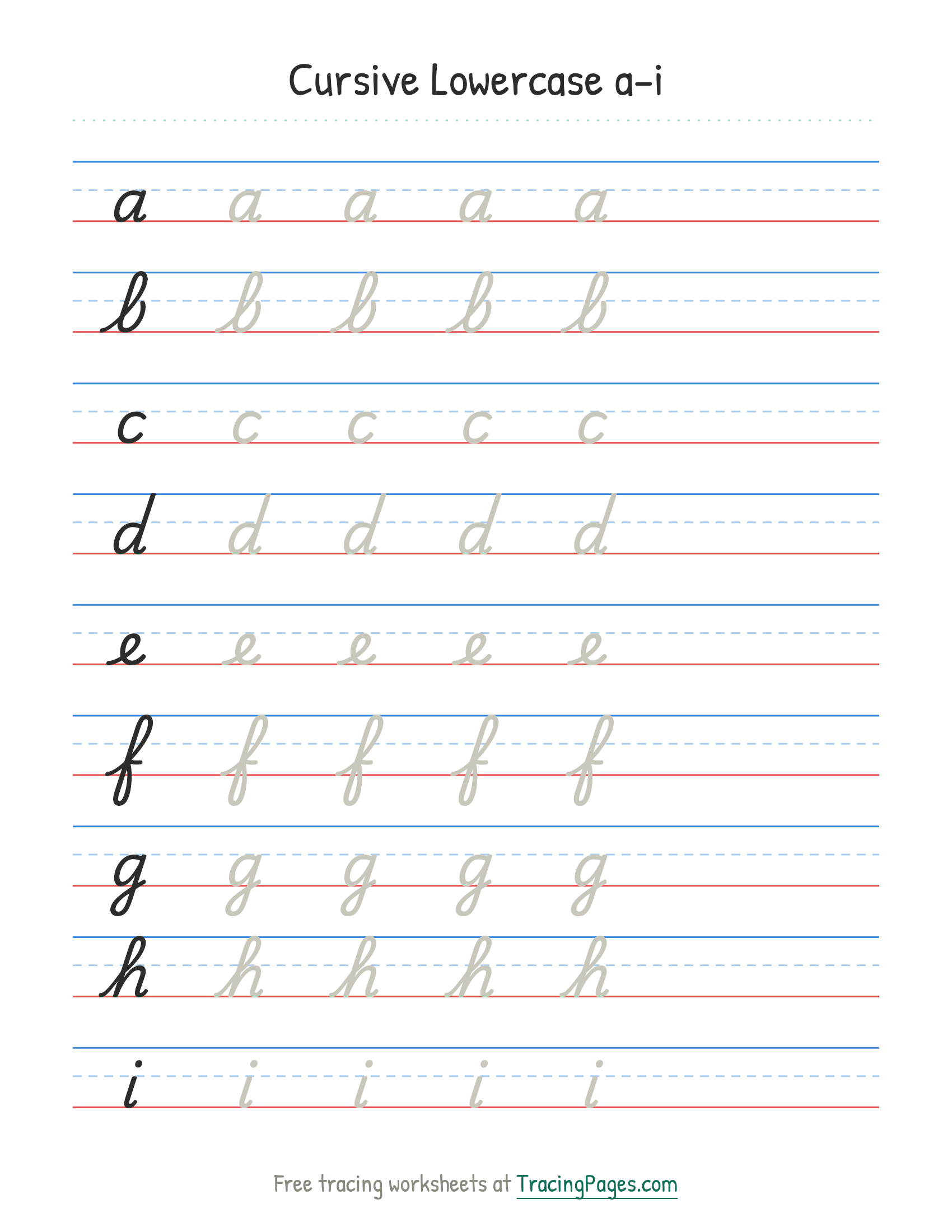
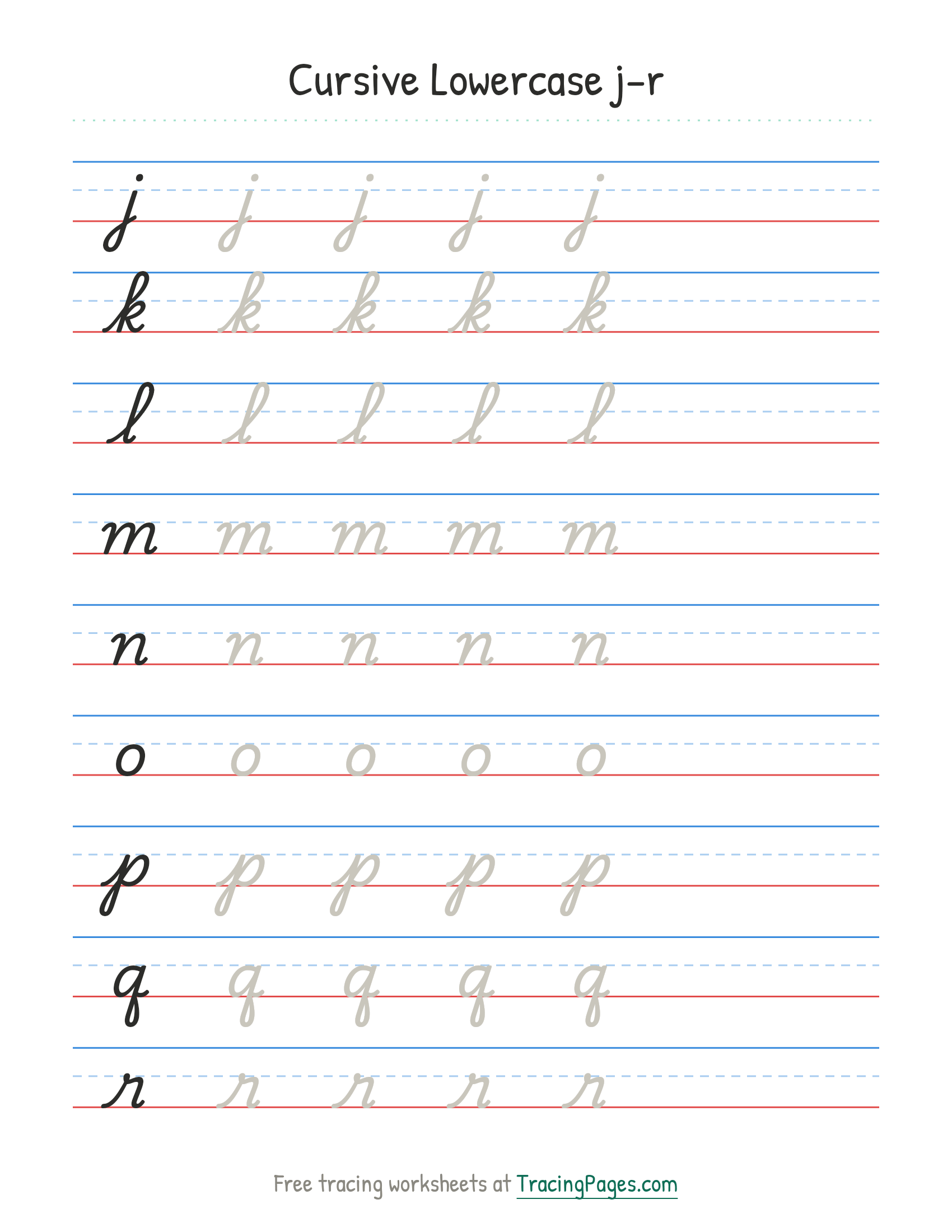
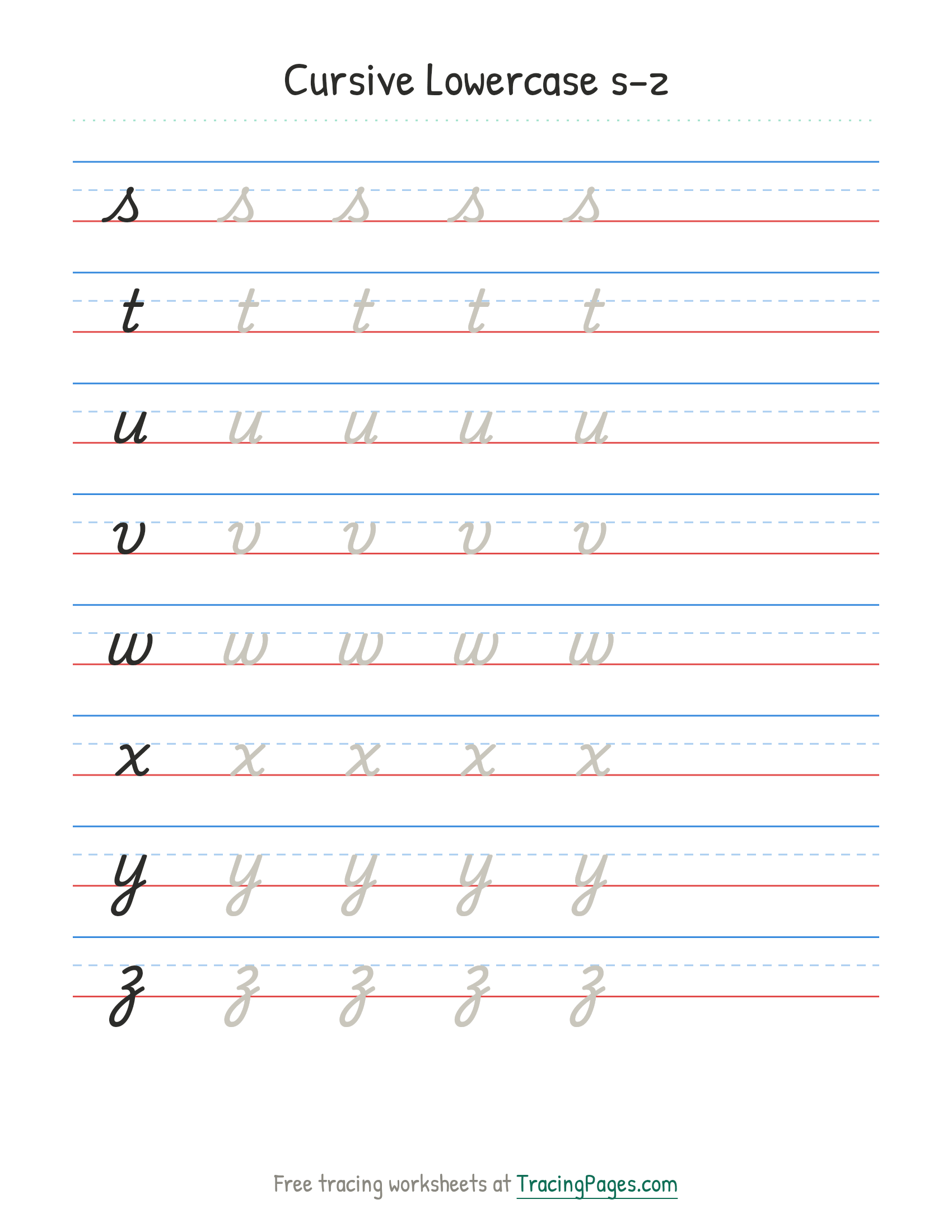
Each row starts with a finished letter in black, then four gray letters to trace, then space to write it alone. Three sheets cover the capitals and three cover the lowercase letters, nine letters to a page.
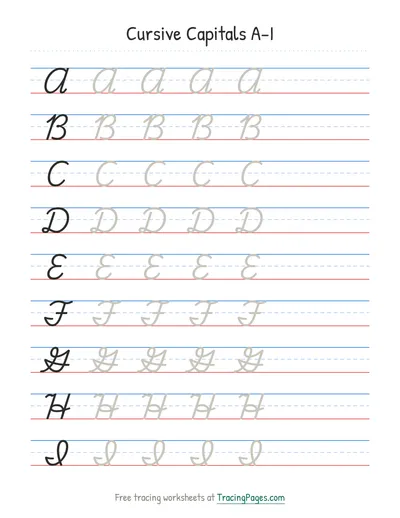
Capitals A–I
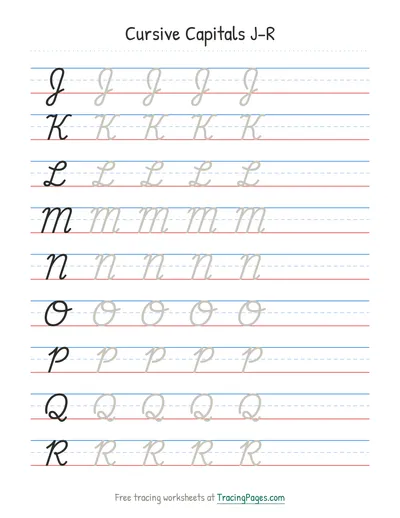
Capitals J–R
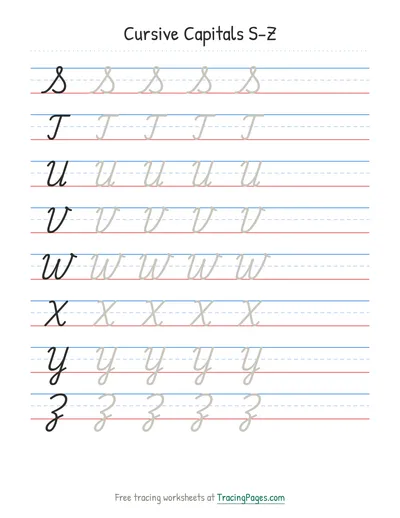
Capitals S–Z
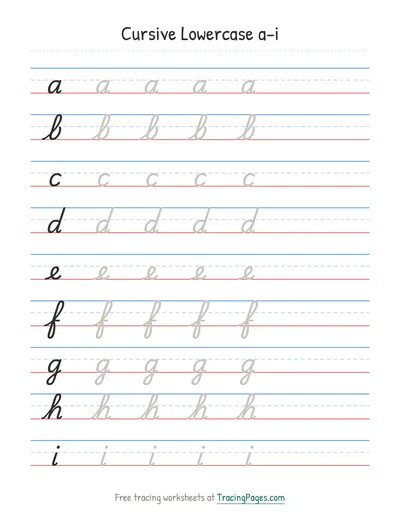
Lowercase a–i
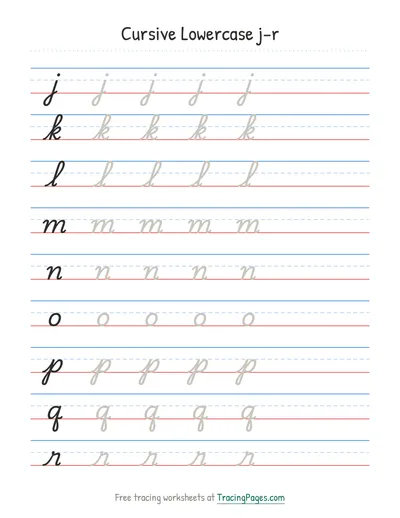
Lowercase j–r
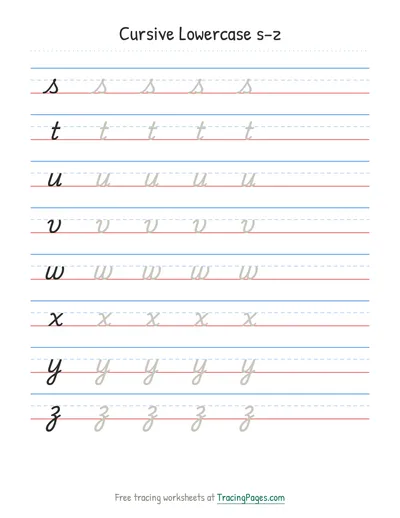
Lowercase s–z
Cursive letters that look different from print
Most cursive letters are a slanted, joined version of the print letter, but a handful change shape enough to confuse a new reader. These are the ones worth pointing out:
- Capital Q looks more like a large 2 than a print Q.
- Capital Z and lowercase z drop a loop below the base line.
- Capital F is a capital T with an extra stroke across the stem, so the two are easy to mix up.
- Lowercase f has a loop above the middle line and another below the base line.
- Lowercase r and s rise to a small peak at the middle line, which their print versions don’t have.
- Lowercase b, o, v and w finish with a small stroke at the middle line, which becomes the start of the next letter when you join them.
The three guide lines work the same way as on our print letter worksheets: tall letters and capitals reach the blue top line, small letters fill to the dashed middle line, and every letter sits on the red base line, with g, j, p, q, y and z dropping below it.
A sensible order for learning cursive
- Lowercase letters in stroke groupsMany US programs group lowercase letters by their first stroke: undercurve letters such as i, t, u and w; downcurve letters such as a, d, g, o, c and q; and overcurve letters such as n, m, v, x, y and z. Learning a group together means learning one starting movement several times.
- Joining lettersOnce a group is comfortable, write the letters joined in short words. Joining is the point of cursive, and the end strokes on the chart show where each letter hands over to the next.
- CapitalsCapitals come last, because they appear far less often. Practice them at the start of names, which also makes the work more interesting for a child.
- Little and oftenTen minutes a day on one sheet does more than a long session once a week. Keep the chart nearby for reference while writing.
Cursive alphabet: frequently asked questions
How many letters are in the cursive alphabet?
The same 26 letters as the print alphabet. Each one has a capital and a lowercase form, so there are 52 shapes to learn, and several of them look quite different from their print versions.
What style of cursive is this?
US traditional cursive, the joined style many American schools teach, with looped capitals and connected lowercase letters. The chart and sheets are drawn with Playwrite USA Traditional, a typeface made for teaching that follows the American school model.
When do children learn cursive?
In the US it is usually taught in 2nd or 3rd grade, around ages 7 to 9. Several states, including California and Texas, now require cursive instruction in elementary school.
Should children learn lowercase or capital cursive letters first?
Most programs start with lowercase, because lowercase letters make up most of what we write and many of them begin with the same few strokes. Capitals usually come once the lowercase letters are joining smoothly.
Is the cursive alphabet chart free to print?
Yes. The chart and all six practice sheets are free to print, download as a PDF and photocopy for home or classroom use, with no account or sign-up.